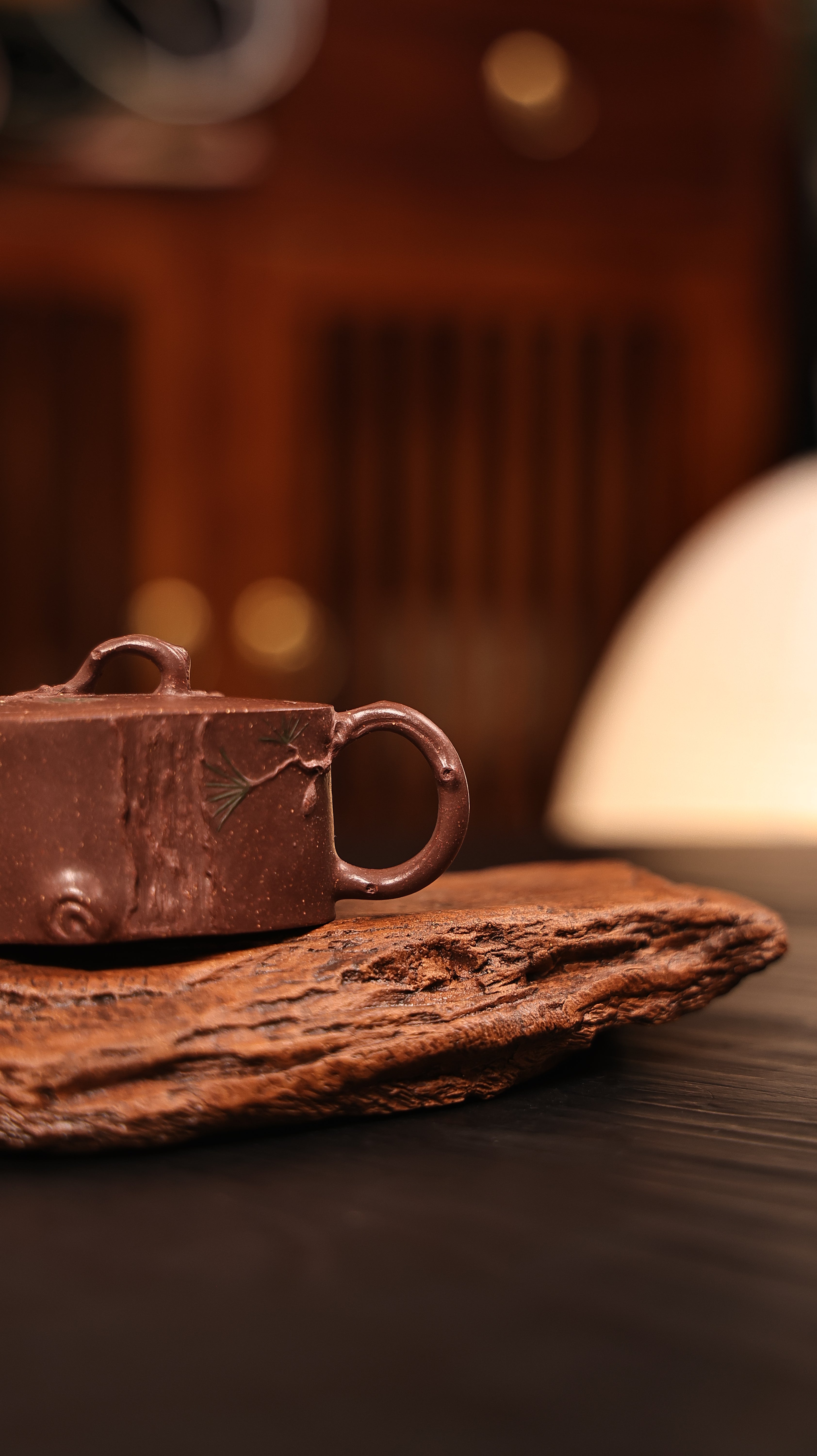
Everlasting legacy distinguishes Huaihai clay vessels across decades,
Expressing exclusive characteristics gathered amidst domestic purple soils, these containers acquire a luster amid operation, strengthening essence emanated from made potions.
Recognizing Yixing Mud: Complete Insights into Zisha
Various followers honor the unparalleled quality of Yixing heliotrope clay, a pillar of established Chinese porcelain. Deriving from the Yixing region of Jiangsu province, this uncommon clay exhibits an elaborate mineral structure, that provides incredible qualities to the manufactured items. Classes within Zisha, including Jiang Mud, Duan Ni Mud, and Jiang Xi Mud, each presents unique colors, materials, and processing traits, influencing the porosity and the ultimate profile ripening of the beverage.
Far Eastern Teapot Rituals: Understanding Mastery
Mandarin teapots embody over mere jars for beverage; they symbolize centuries of inherited craft. From the famous Yixing clay variations, respected for their porous nature which delivers unmatched flavors to the drink, to the refined porcelain from Jingdezhen, each piece tells a anecdote of labor. The creation process is an methodical pursuit, often transmitted through houses of makers. These connoisseurs use historic methods such as hand-building, casting on wheels, and adorned, demonstrating profound reverence for the foundation and the trade itself. Contemplate the labor invested in each piece as a symbol of Chinese artistry legacy.
- Fine urns: a famous assortment.
- Elite ceramic teapots: known for their beautiful design.
- Forming techniques: a exacting yet gratifying procedure.
Yixing Zisha Jar Treatment: Safeguarding Your Treasure
Appropriate support of your cherished Yixing Zisha flask is fundamental to boosting its longevity. Crafted from exclusive purple sand earth, these fine teapots form a subtle patina after operation, significantly boosting their allure. Eschew agents; a soft rinse with moderate temperature hydraulic medium is effective. Steer clear of hot water for scrubbing the teapot, as it may break down its structure. Allow it to fully dry away from powerful sunlight. Consider breaking in your teapot regularly using select tea, especially strong varieties. Here is a brief guide:
- Cleanse with temperate aqueous.
- Avoid cleaners.
- Enable it to become free of moisture.
- Prepare with fine tea.
Origins of Yixing Teapots: From Basic Inception
The chronicle of Yixing teapots launches initially during the Jin dynasty, around the 16th period. Initially, these pots were not the cherished artifacts they are valued presently. They were created by territorial potters using the unparalleled purple clay obtained solely in the Yixing vicinity. These early artworks were principally utilitarian, created for habitual performance and often minimal in configuration. It was not until the next dynasty that they triggered to earn reputation beyond mere utilitarian ceramics.
Opting For the Best Chinese Vessel: A Novice's Guide
Venturing the world of Yixing teapots can be difficult, but eschew worry! For first-timers, the fundamental factor is understanding the earth. Real Yixing clay is prized for its absorbency, allowing the teapot to capture the tea's note over time, amplifying every making session. Reflect on the shape; traditional round shapes prevail, yet specific preferences influence. Lastly, review the finish—while some favor an unfinished appearance, others adore a light gloss. Take your time in the decision process—this is an investment in a adored piece of craft.
Eastern Clay Vessels and Their Power on Chinese Liquid Custom
Zisha teapots, produced from Yixing, China, have profoundly transformed traditional Chinese brew culture. Those Yixing clay teapots, prized for their characteristic cast, surface, and exceptional ability to impart a subtle flavor to the liquid, act as more than mere vessels; they are cherished masterpieces and symbols of eminence. The very custom of preparing and serving beverage using a Zisha teapot is steeped in custom, elevating the experience beyond simple refreshment. Epochs of artisans have enhanced their techniques, passed down through clans, resulting in highly desired pieces. Accordingly, Zisha teapots are frequently treasured, playing a crucial part in cultivating Oriental appreciation for aesthetics and the process of elixir ceremonies.
- Characteristic Clay Composition
- Adding Subtle Flavor
- Beautiful Craftsmanship
Recognizing Certified Rare Traditional Pieces
Buying a truthful Yixing teapot can be a fulfilling experience, but the environment is often filled with frauds. Separating between a original antique and a modern reproduction requires scrupulous inspection. Key signals Chinese Teapot include the clay's earthy shade, often displaying banded surfaces, and the missing of modern curing imprints. The configuration should appear natural elegance, reflecting the traditional Yixing approach. Finally, evaluating the artisan's inscription is paramount to verify legitimacy against official testimonies.
- Assess the clay's feel.
- Look for irregularities, indicative of tailored quality.
- Seek an connoisseur for validation.
Investing in Chinese Containers: A Comprehensive Handbook to Clay Ware Review
The industry of 宜兴 Zisha wares shows a remarkable prospect for savvy patrons. Progressively, the rate of these artisanal artifacts is affected by multiple considerations, such as the standard of composition, the dexterity of the potter, the cultural importance, and, naturally, the ongoing interest. Starters should dedicate effort on exploring the distinct variants of Zisha clay—such as Chilled Stream, Hushed Pot, and Blush Clay—and familiarizing the qualities linked to each. Attentive evaluation of the item's outline, tint, and logo is correspondingly fundamental to make experienced judgments when investing.